
Playroom And Indoor Playhouse Ideas That Actually Work for Everyday Living
Designing a playroom isn't just about filling a space with toys-it's about creating a room that works for both children and adults. A space where kids can play freely, but also one that feels organized, calm, and easy to maintain over time.
Playroom And Indoor Playhouse

This playroom was designed with that balance in mind. Every element serves a purpose, from storage and seating to imaginative play zones that keep everything contained in one area.
Start with Function First
Before adding decor or themed elements, focus on how the room will be used.
In this space, the priorities were:
- Easy-access toy storage
- Comfortable seating for adults
- Defined areas for different types of play
- A central feature that encourages imaginative play
Why this matters: Without structure, playrooms quickly become cluttered and overwhelming. A thoughtful layout keeps everything usable long-term.
Multi-Use Furniture Makes a Huge Difference
One of the most useful pieces in this room is a cubby storage play table.
It does two things at once:
- Stores toys in an organized way
- Provides a flat surface for building, puzzles, and play
This kind of furniture reduces visual clutter while making cleanup easier for both kids and adults.
Create a Comfortable Reading and Wind-Down Area
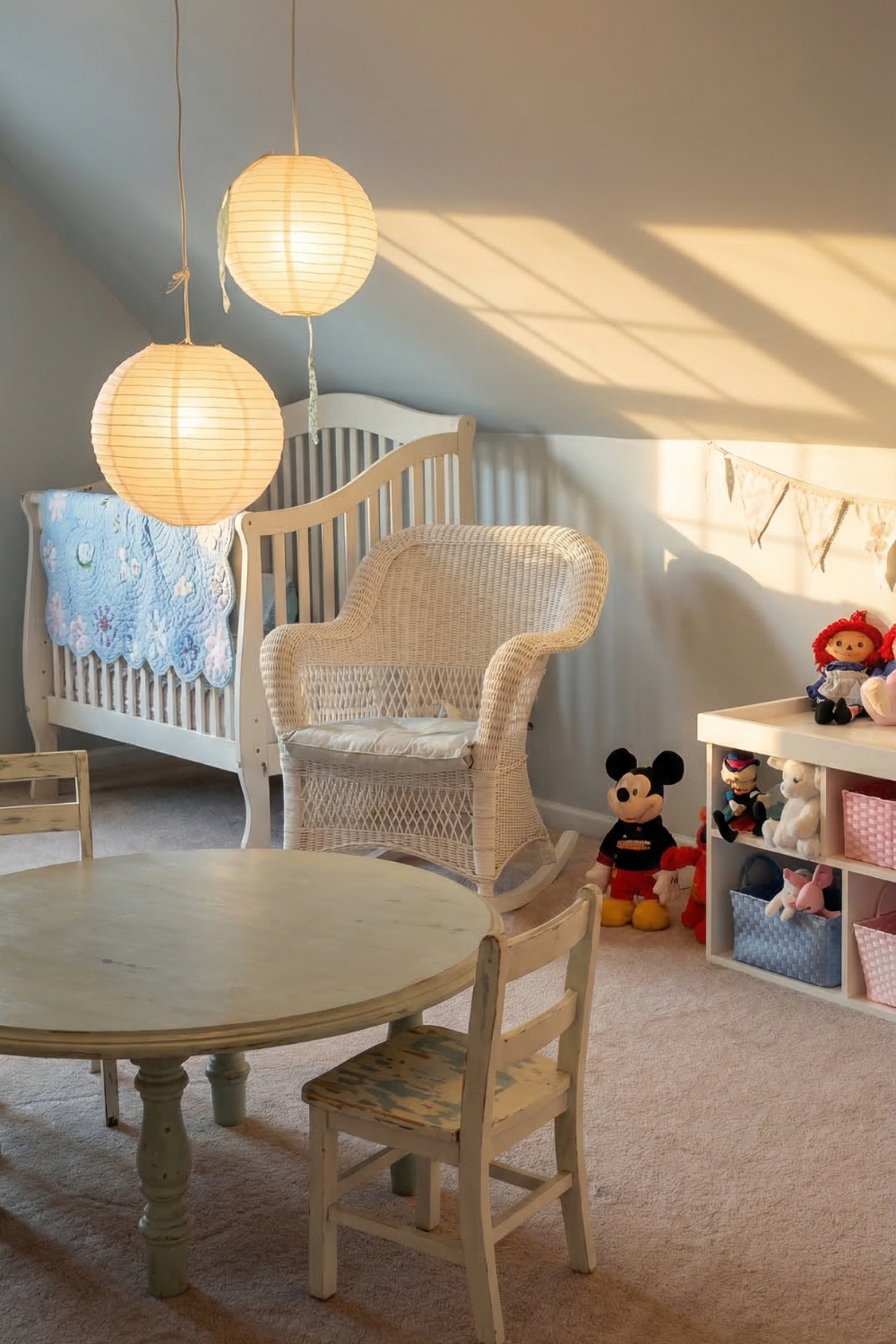
Even in a playroom, having a quiet corner matters.
A simple bed or cozy seating area can become:
- A reading space
- A nap spot
- A place for one-on-one time
Adding a front-facing book display shelf makes a noticeable difference. Children are far more likely to choose books when they can see the covers instead of just the spines.
Why this works:
It encourages independent reading while also making shared reading time more inviting.
Don't Forget Seating for Adults
This is one of the most overlooked parts of playroom design.
Including multiple comfortable chairs allows:
- Parents or grandparents to stay longer
- Conversations to happen naturally
- Supervision without feeling cramped or temporary
When adults are comfortable, the room gets used more often.
The Indoor Playhouse as a Focal Point

The standout feature of this space is the indoor playhouse.
It works because it creates a clear destination within the room-a place for imagination, pretend play, and quiet moments.
Inside the playhouse, several small zones were created:
Mini Play Kitchen
A dedicated space for pretend cooking and role play.
Dress-Up Area
Encourages creativity and independent play.
Doll Bed and Care Space
Adds another layer of storytelling and nurturing play.
Display Area for Artwork
A simple way to rotate and showcase children's creations.
Why this setup works:
Instead of toys being scattered, everything has a "home" within the playhouse, which naturally keeps the room more organized.
Keep Decor Simple and Flexible
Instead of designing around a seasonal theme, focus on neutral, adaptable elements.
- Natural textures (wood, wicker)
- Soft, light colors
- Pieces that can be reused in different ways
This allows the room to evolve without needing constant updates.
Small Details That Make a Big Impact
- Low-height furniture so children can access everything easily
- Defined zones to prevent everything blending together
- Open storage instead of closed bins for frequently used items
- A mix of active and quiet play areas

What Makes This Playroom Work Long-Term
This isn't a one-time setup-it's a room designed to grow with use.
- Storage adapts as toys change
- The playhouse remains relevant for different ages
- Seating keeps the space functional for everyone
The goal isn't perfection-it's usability.
Final Thoughts
A well-designed playroom doesn't need to be complicated. The key is combining function with a few thoughtful features that make the space enjoyable to use every day.
By focusing on layout, comfort, and defined play areas, you create a space that stays organized longer and actually supports how children play.