
How To Make A White Kitchen Feel Cozy And Lived In
There's a reason white kitchens continue to show up again and again, even as trends shift.
They're not just a style choice they're a foundation. A white kitchen gives you a clean, flexible starting point that can evolve with your taste over time. And when it's done thoughtfully, it never feels cold or generic. It feels layered, lived-in, and completely personal.
White Kitchen
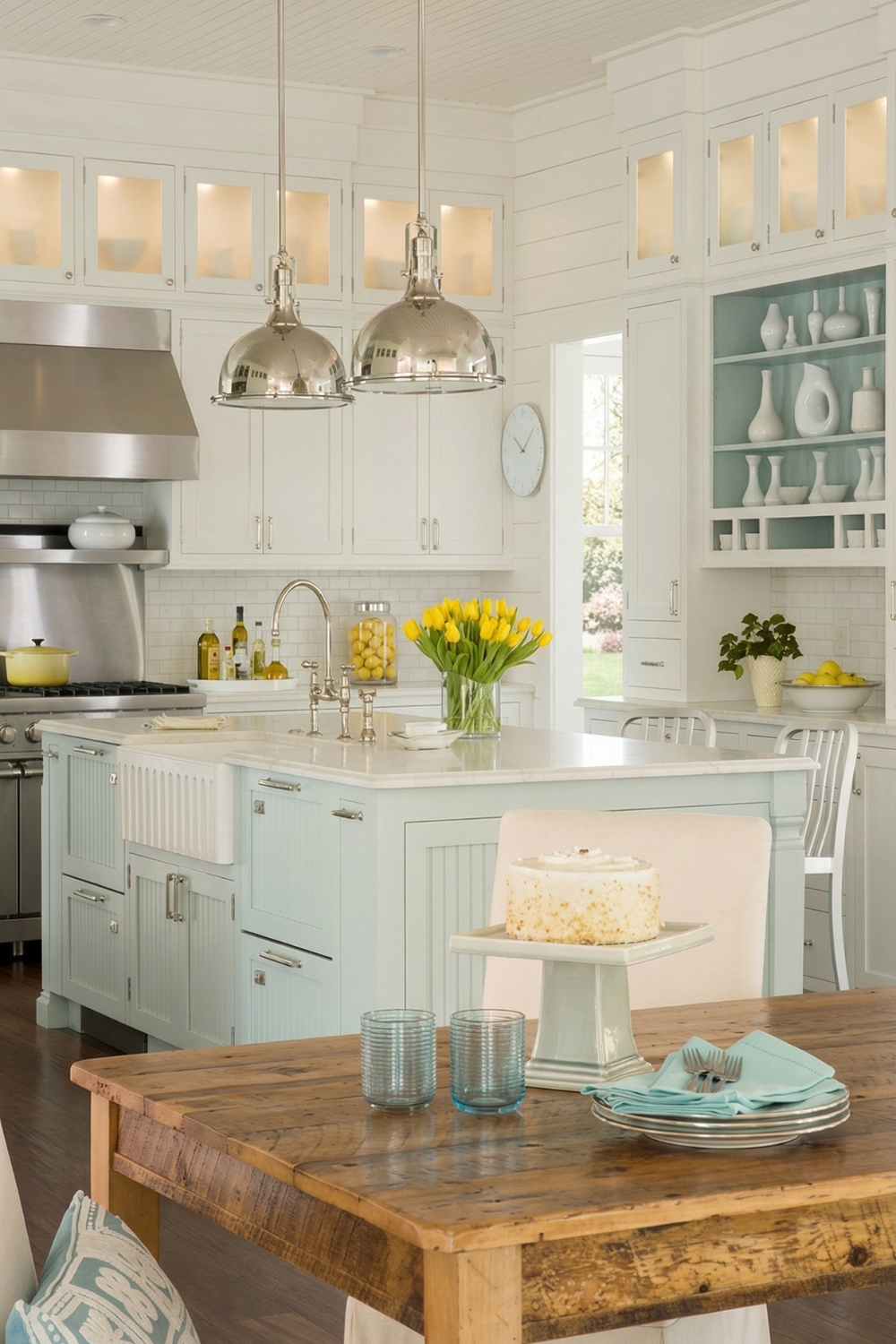
While planning and refining kitchen ideas, it's easy to notice one consistent theme: the most inviting white kitchens are never just white. They're built through contrast, texture, and meaningful details.
Let's look at what actually makes them work.
The Secret to a White Kitchen That Doesn't Feel Flat
A common concern with white kitchens is that they can feel sterile or unfinished. That usually happens when everything blends together without contrast.
The difference comes down to balance.
1. Bring in Natural Wood for Warmth
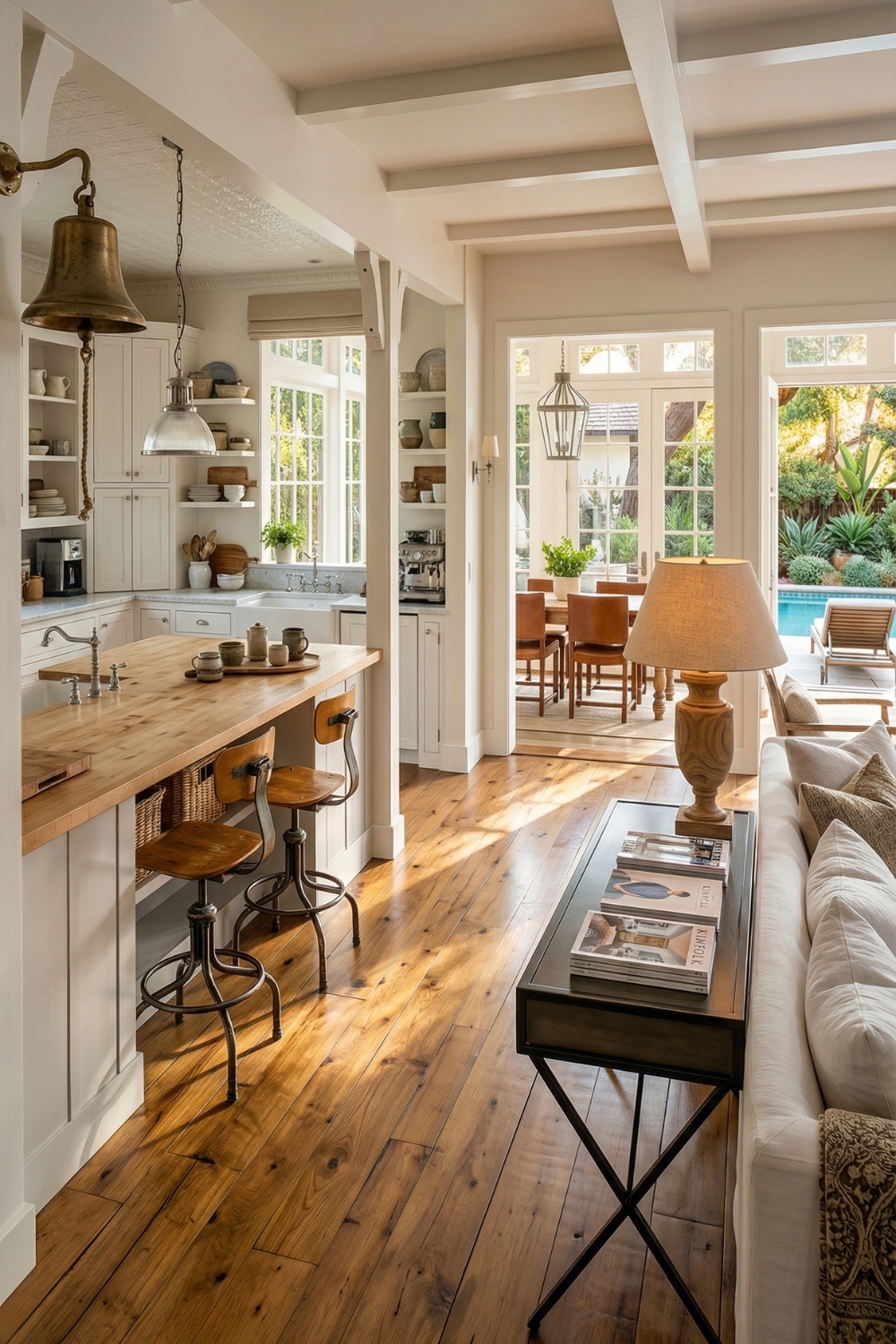
One of the easiest ways to soften a white kitchen is by repeating natural wood tones throughout the space.
This might show up in:
- A wood island countertop
- Bar stools or dining chairs
- Open shelving
- Flooring
Repeating that same tone in multiple areas creates visual rhythm. It also prevents the kitchen from feeling too stark while adding a grounded, organic feel.
2. Use Soft Color to Shift the Mood
White doesn't have to mean colorless.
Even the smallest hint of color-like soft blue, sage, or muted gray-can completely change how a kitchen feels.
- Soft blue → relaxed, coastal feel
- Sage green → calm and natural
- Warm neutrals → cozy and timeless
The key is subtlety. These tones should support the white, not compete with it.
3. Add Contrast with Dark Elements
Contrast is what gives a white kitchen depth.
Without it, everything can blur together. With it, each element stands out.
You can introduce contrast through:
- Black or dark hardware
- Lighting fixtures
- A darker backsplash
- Deep-toned flooring
Even small touches-like repeating black in fixtures and accessories-can anchor the entire space.
4. Let Architecture Do the Work
Sometimes, the beauty of a kitchen has very little to do with color.
Details like:
- Ceiling beams
- Large windows
- Unique layouts
- Built-in elements
…create interest before styling even begins.
White cabinets allow those architectural features to stand out instead of compete.
5. Mix Finishes to Avoid a One-Note Look
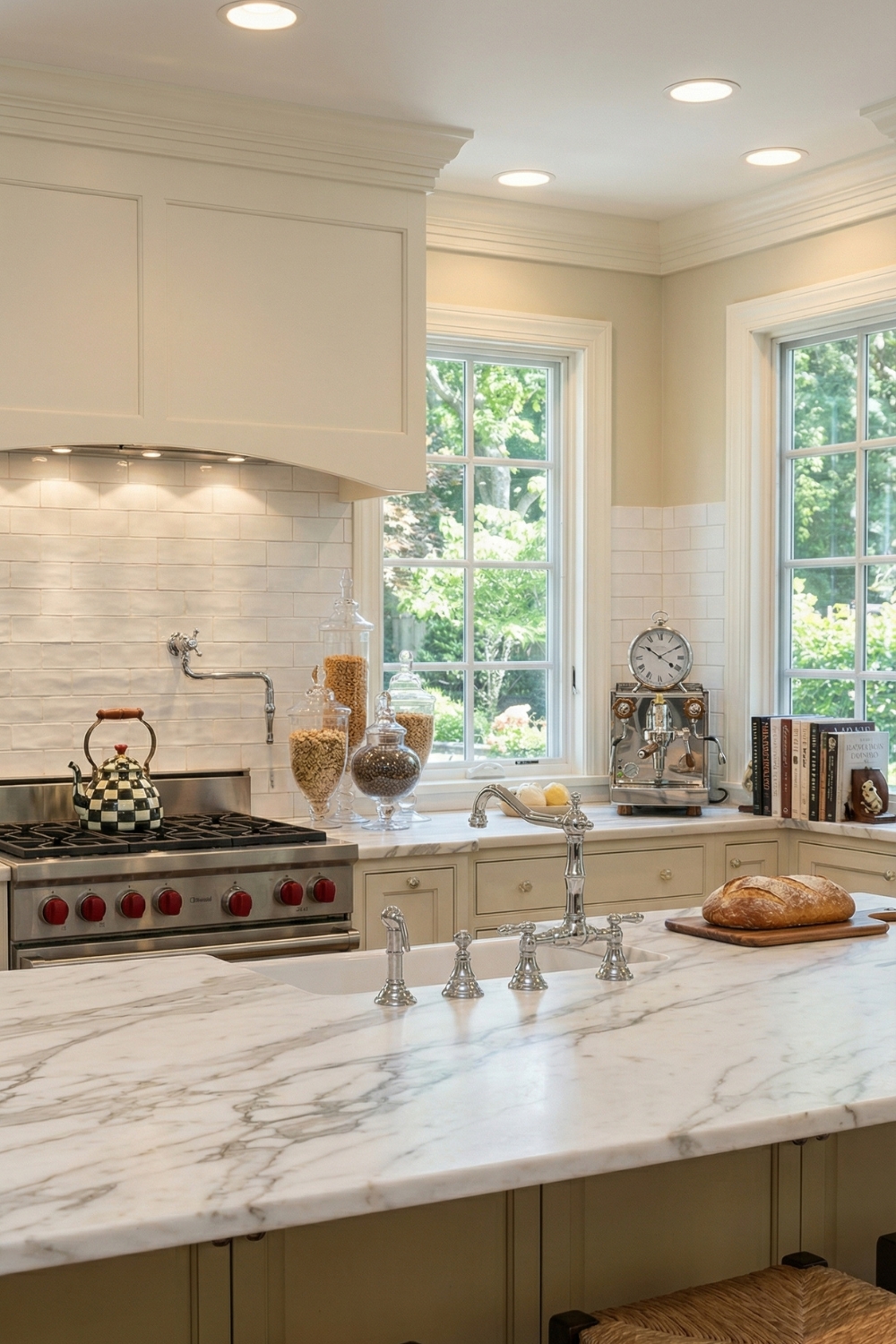
A well-designed white kitchen always includes a mix of materials.
Think:
- Glass (pendants, cabinet fronts)
- Metal (fixtures, hardware)
- Wood (floors, accents)
- Stone (countertops, backsplashes)
These layers keep the space visually interesting and prevent it from feeling too uniform.
6. Repeat Colors for a Pulled-Together Look
One of the simplest styling tricks is repetition.
- When a color appears in multiple places-like black in lighting, hardware, and decor-it creates cohesion without effort.
- This works especially well in white kitchens, where even small repeated details become more noticeable.
7. Focus on Budget-Friendly Updates That Matter
A beautiful white kitchen doesn't require a full renovation.
Some of the most impactful changes are surprisingly simple:
- Removing upper cabinets for open shelving
- Updating a range hood to create a focal point
- Swapping outdated lighting
- Painting cabinets in a fresh white tone
With thoughtful choices, even a modest budget can completely transform the space.
What Makes a White Kitchen Feel Personal
The most memorable kitchens aren't the ones that follow trends perfectly.
They're the ones that reflect how people actually live.
A white kitchen becomes personal through:
- Collected pieces instead of all-new décor
- Functional layouts that suit daily routines
- Materials that age well and tell a story
- Small details repeated with intention
White simply creates the backdrop-it's everything layered on top that brings it to life.
Final Thoughts
- White kitchens have stayed relevant for a reason.
- They adapt. They evolve. And when designed with warmth, contrast, and texture, they never feel outdated.
- Instead of asking whether white is still in style, the better question is:
- How can you make it your own?