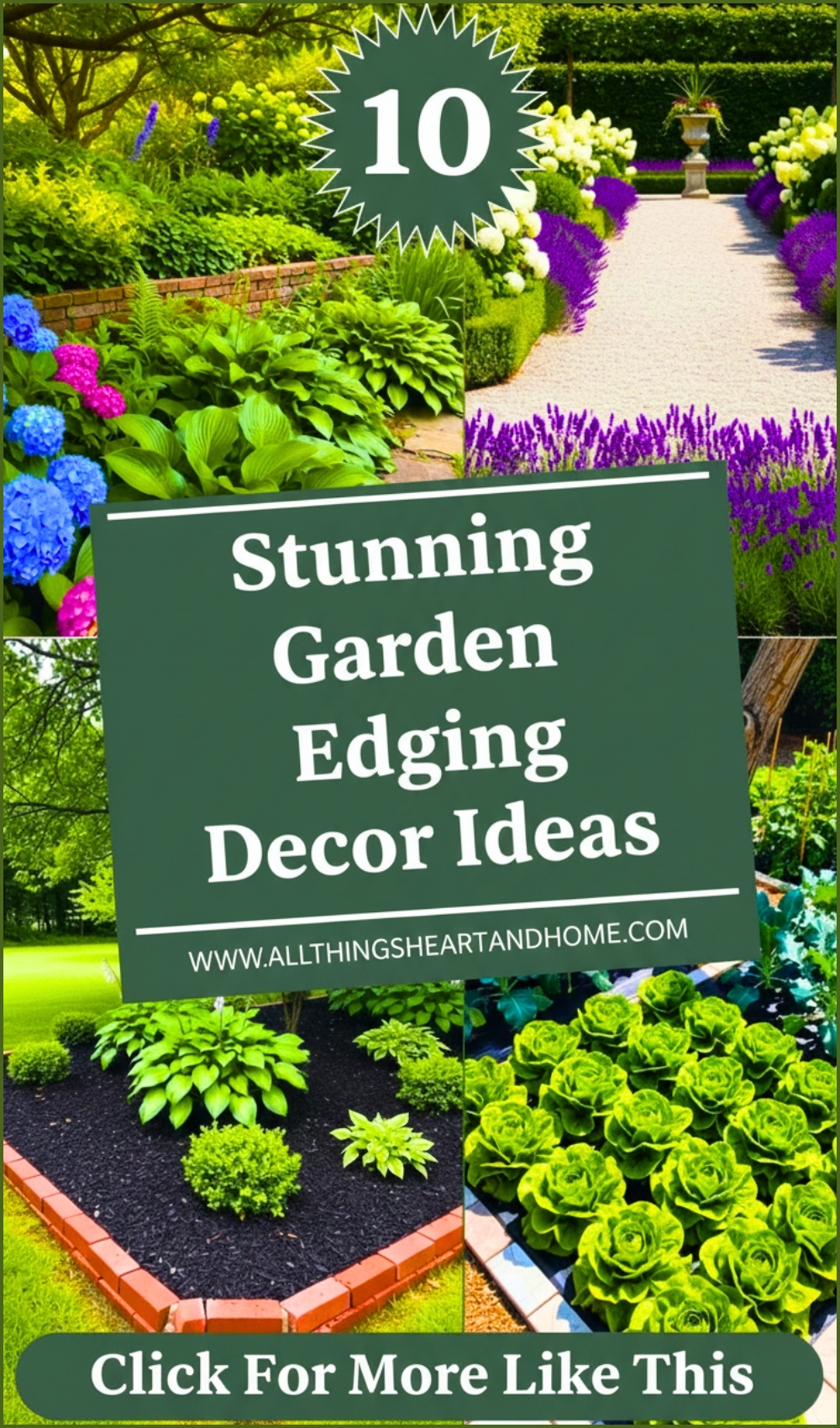
13 Garden Edging Ideas Cheap For A Stylish Backyard
Reclaimed bricks make the cheapest garden edging you can lay, and you do not need mortar. Set them on their corners in a shallow trench so each leans into the next, and the border holds a curve as easily as a straight run.
My neighbour edged her whole front bed for the price of one bag of reclaimed bricks. Cheap garden edging comes down to what you can get free and how you set it. She dug a trench two inches deep, stood the bricks on their corners so each one leaned into the next, and tamped soil behind them. Four years on the line is still straight, and the curved section around her rose bed has not shifted either.
Stunning Garden Edging
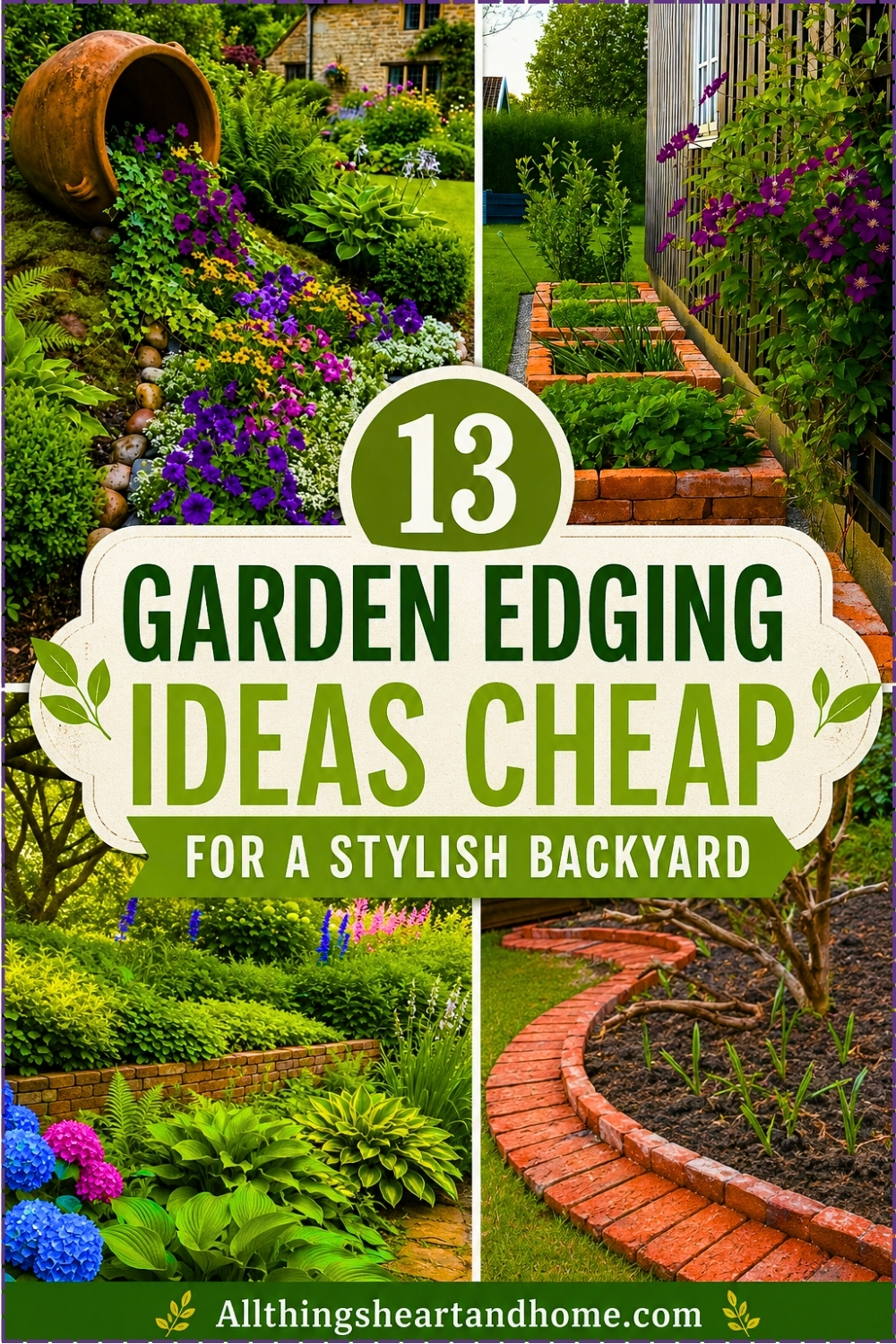
Neat edges are the cheapest trick in gardening. You can have the same plants, the same grass and the same soil, but the moment there's a clean line between the bed and the lawn, the whole yard looks like someone takes care of it. Edging also does real work: it stops mulch from washing onto the path, keeps grass from creeping into your flowers, and gives you a hard line to mow against so you're not trimming by hand every weekend. The ideas below range from a free spade-cut edge to brick and stone borders, and most of them take a Saturday afternoon at most.
Colorful Spillover Garden
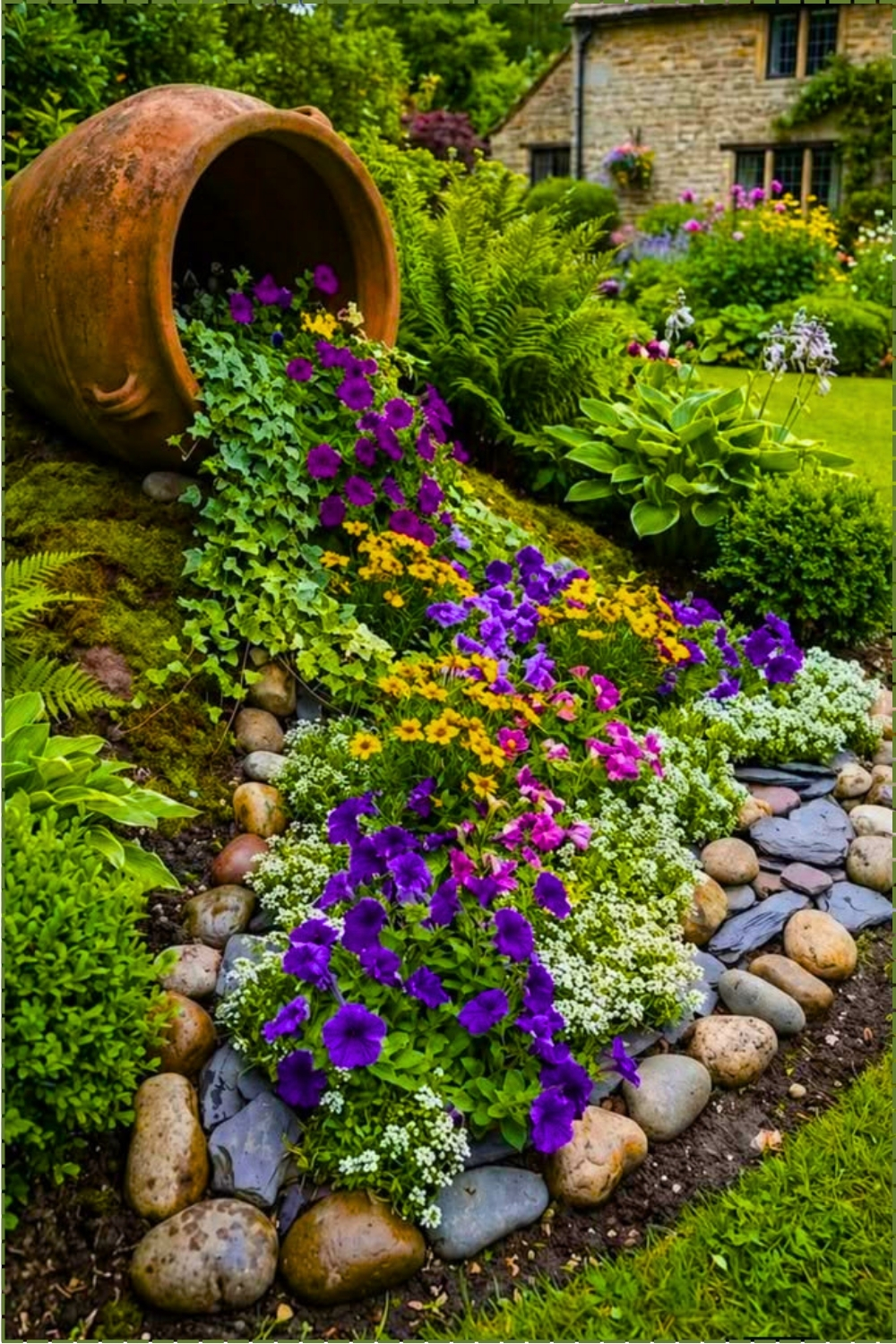
A charming cottage garden featuring a large tipped clay pot overflowing with vibrant purple, yellow, and white flowers. Smooth river stones create a natural border, while lush ferns and greenery complement the colorful floral design.
Brick Raised Garden Beds
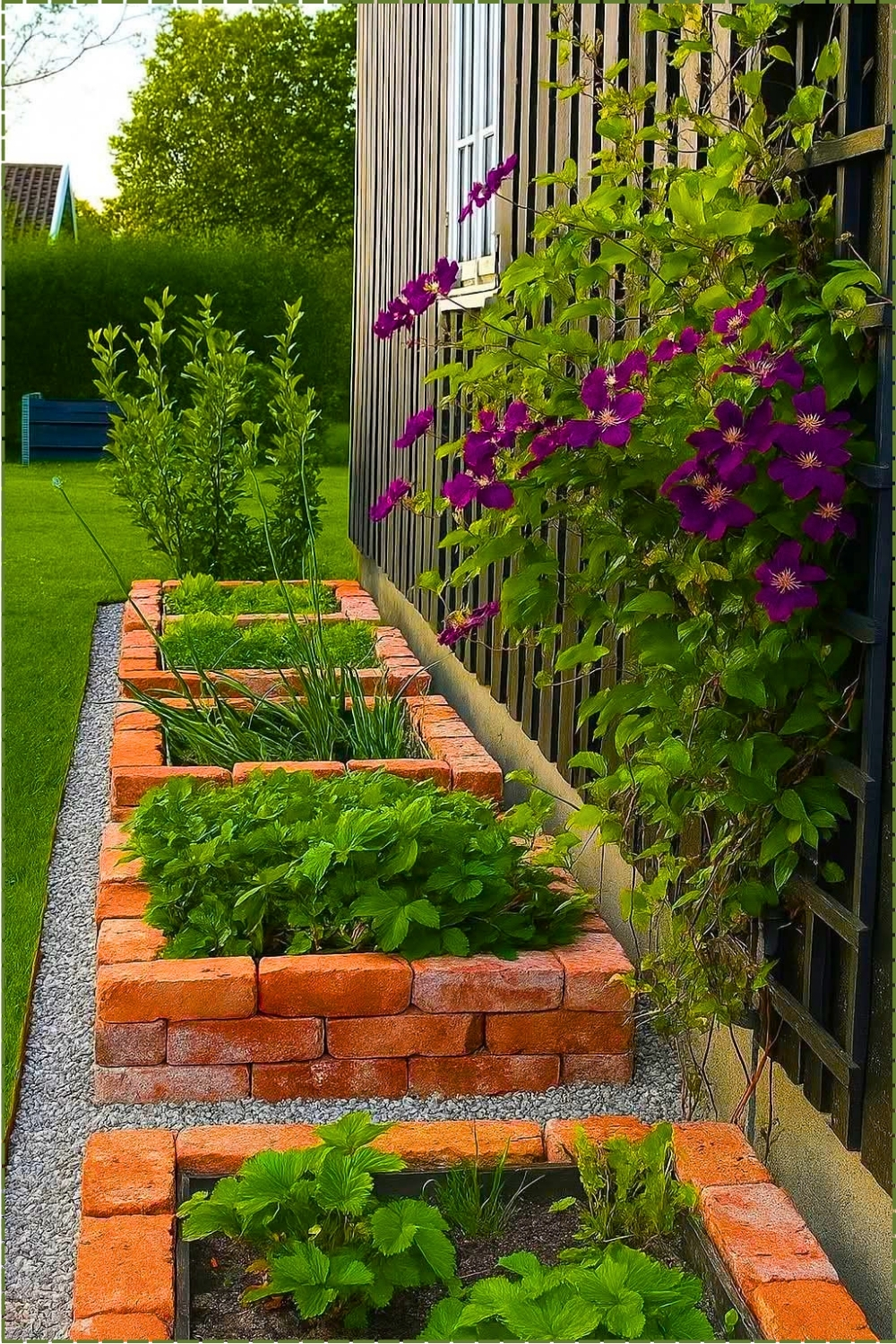
A practical backyard garden featuring raised planting beds built from warm red bricks. Green vegetables and herbs fill each section, while a flowering vine climbs the nearby wooden wall for added beauty and privacy.
Lush Backyard Garden With Layered Perennials
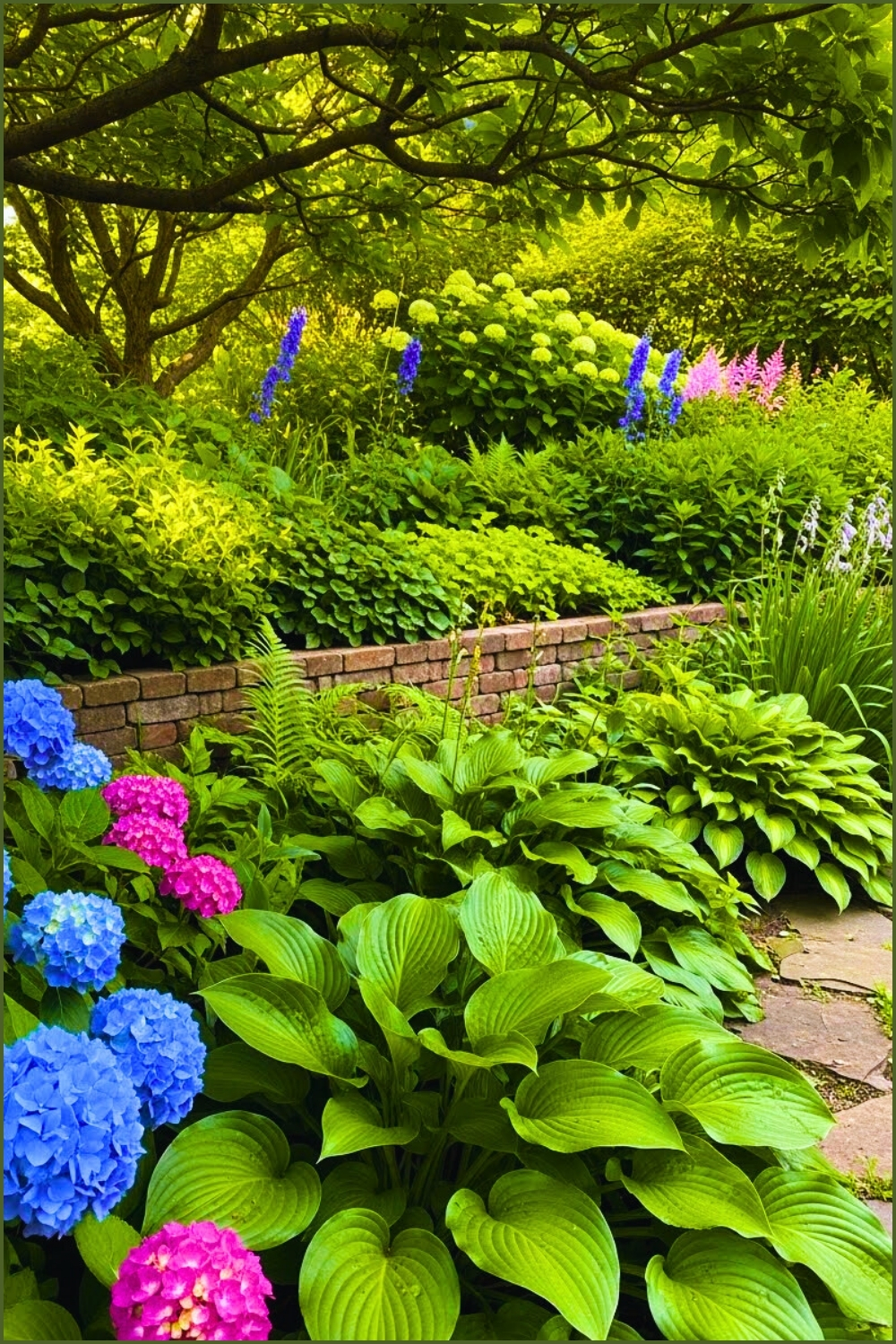
Full beds need a firm edge or they spill everywhere. Layer your perennials with the tall ones at the back and low spreaders at the front, then cut a clean trench edge along the lawn side to hold it all in. The deep greens and mixed flower colors look better against that bare strip of dark soil than they do against grass. This works well in a real backyard because perennials come back on their own, so once the shape is set you're mostly just trimming. Keep the edge line curved rather than straight; it looks softer and it's easier to mow.
Minimalist Xeriscape Landscape With Sandstone Stepping
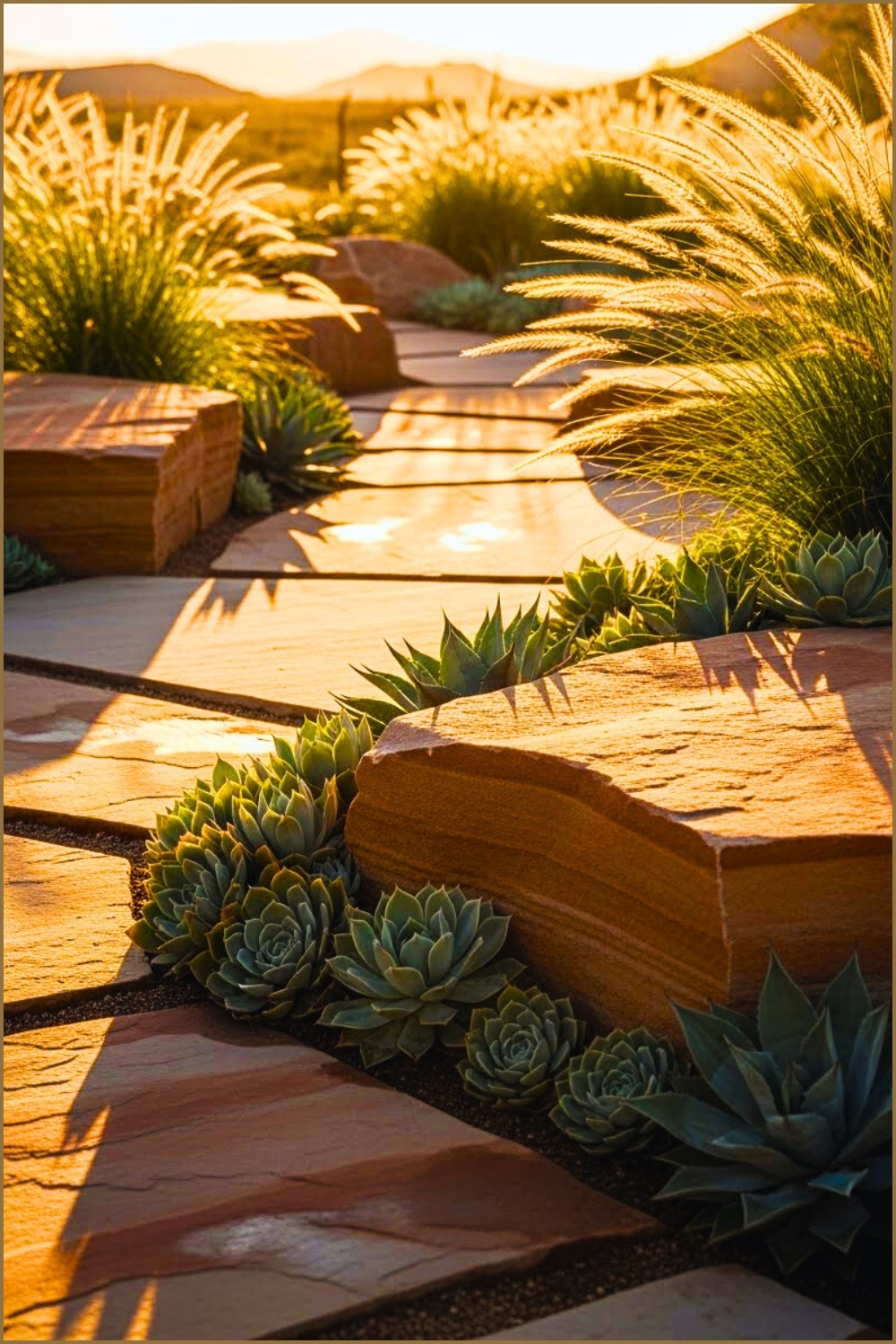
Dry gardens live or die by their edges. Pale sandstone steppers set into light gravel, with a thin steel or stone border holding the gravel back, gives you that clean desert look without the gravel ending up all over the driveway. The colors here stay in the same family: sand, tan, warm grey, with a few silver-green plants breaking it up. It's a smart choice if watering is expensive or your summers are brutal, and there's almost no upkeep. Set the steppers a normal stride apart so people actually walk on them instead of around them.
Gravel Garden Walkway Through Perennial Bed
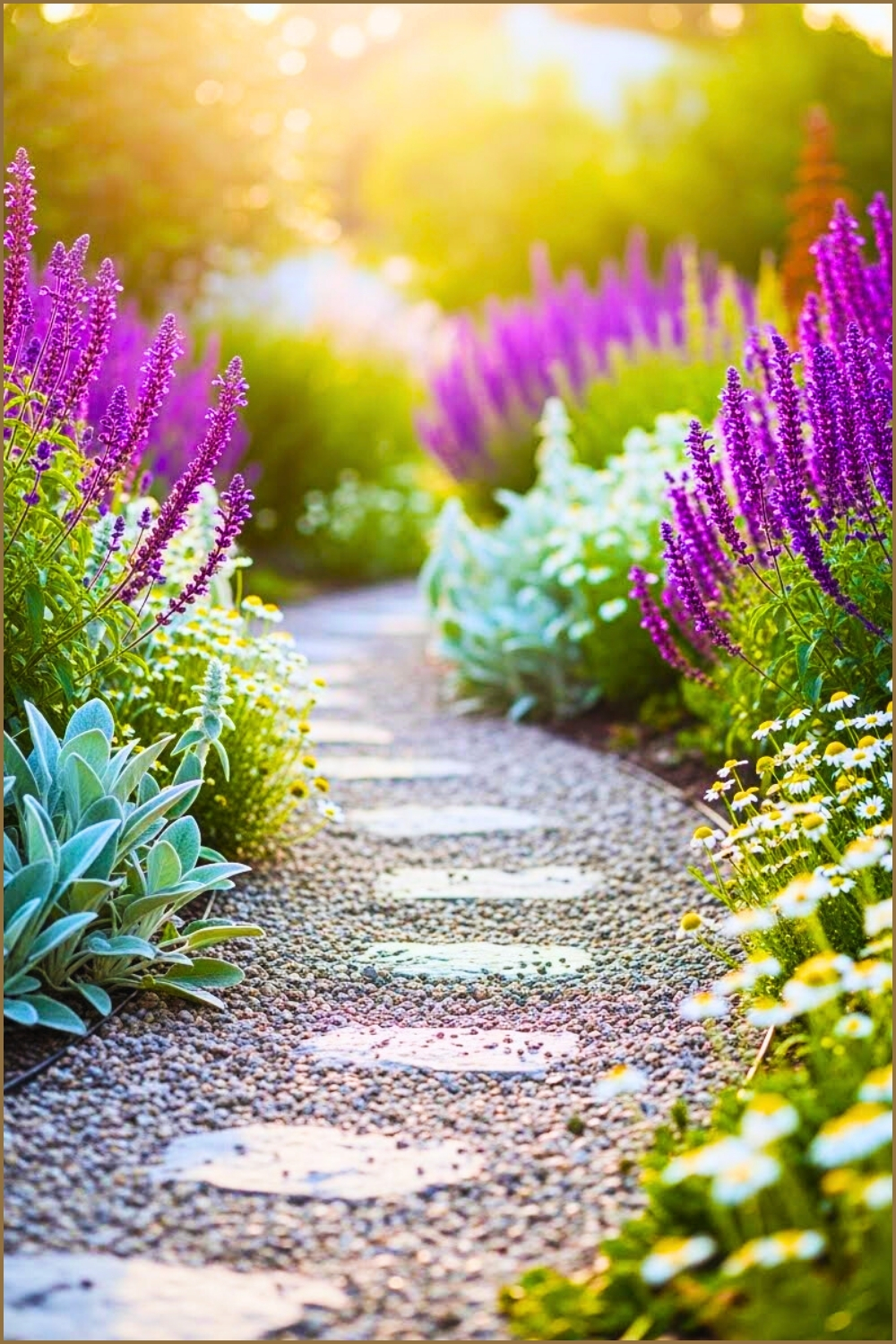
Crunchy gravel paths are underrated. Run a narrow gravel walkway right through the middle of a planted bed and edge both sides with brick laid flat or with metal strip edging, otherwise the stones migrate into the soil within a season. Pea gravel in a warm grey or soft honey color looks good against green foliage and doesn't get too hot underfoot. The sound of walking on it is half the appeal. This is a great fix for a wide bed you can't reach the middle of, since the path doubles as your working space when you're weeding.
Woodland Backyard Garden With Shade Trees
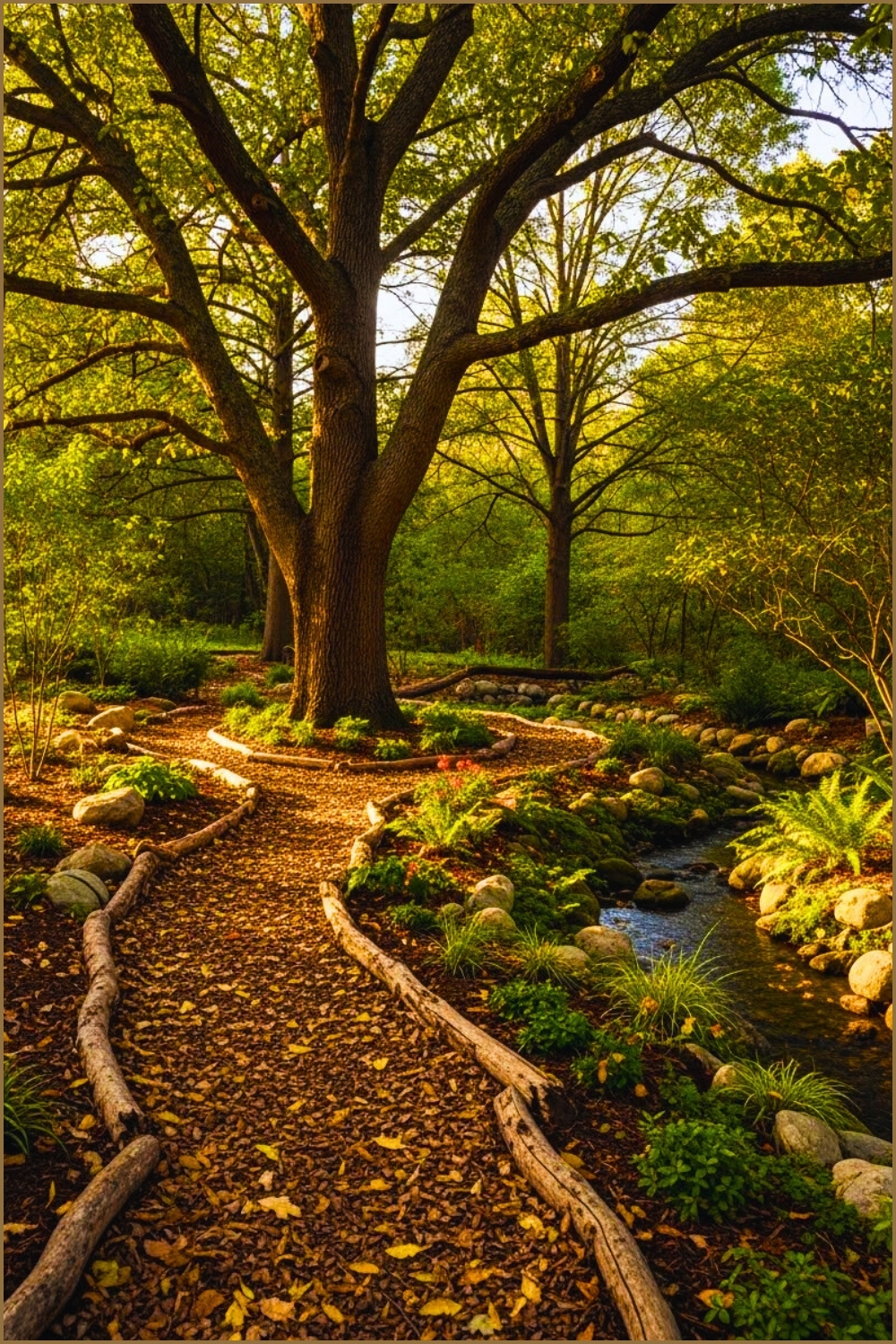
Shady corners under trees look messy without a border. Use log edging, split timber, or a low line of rounded stones to separate the planted area from the lawn, then fill the bed with bark mulch and shade plants like hostas and ferns. The browns and deep greens feel calm and natural, which suits this kind of space better than anything crisp or formal. Wood edging blends in instead of standing out, and it's cheap. Just keep the edge a little away from the trunk so you're not piling mulch against the tree.
Productive Vegetable Garden With Raised Beds
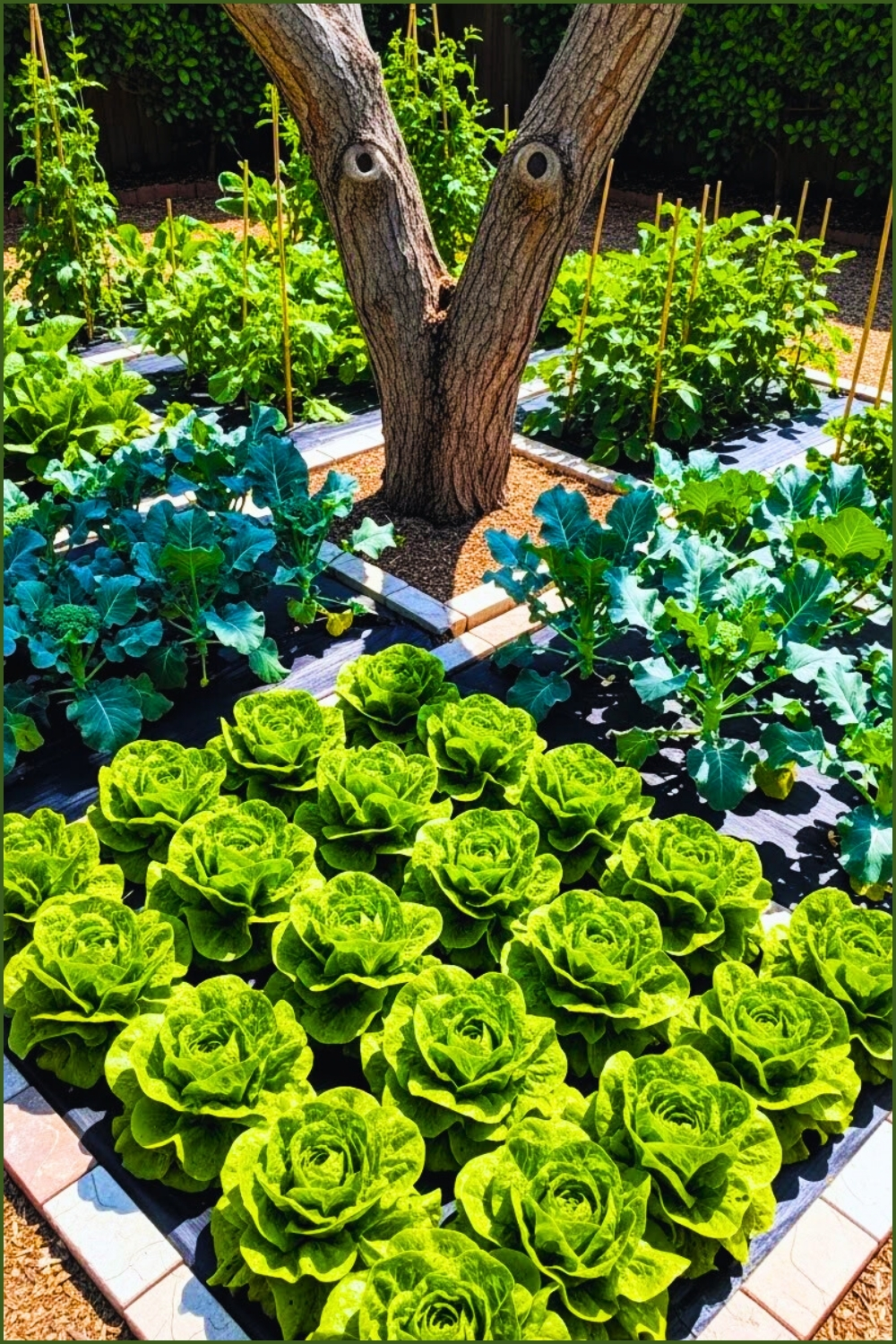
Useful beats pretty in a vegetable patch, but you can have both. Raised beds are edging by design: the frame holds the soil, keeps the grass out, and gives you a clean rectangle to work in. Untreated cedar goes a soft silver-grey over time and looks good next to green leaves, while metal beds in black or dark green feel more modern. Leave enough room between beds to fit a wheelbarrow, and put gravel or wood chips in the walkways so you're not standing in mud after rain.
Cactus And Succulent Garden In Terracotta Pots
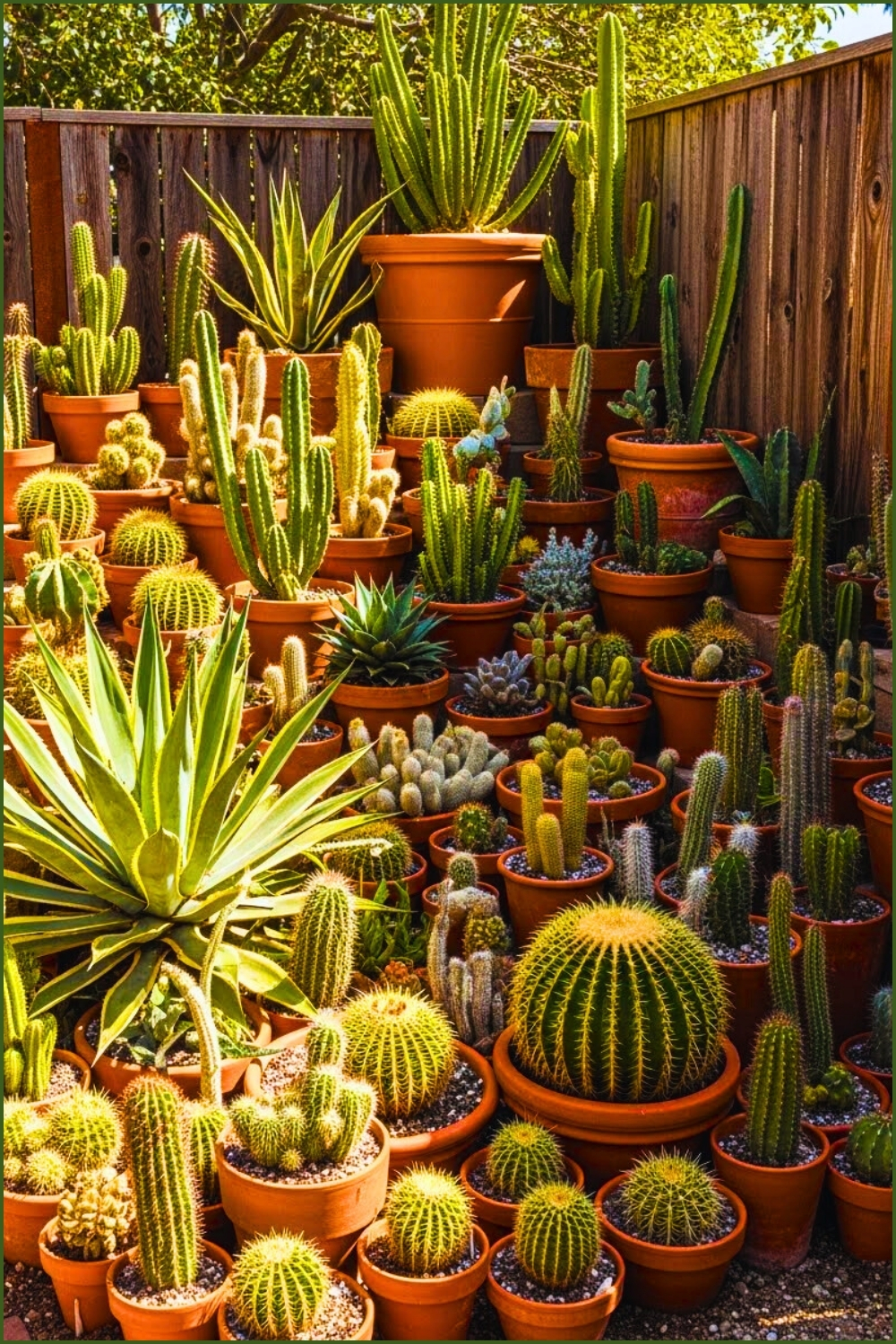
Warm terracotta against grey gravel is one of the easiest color pairings out there. Group pots in different sizes along the edge of a bed or a path and let them act as the border themselves, which is perfect if you rent or don't want to dig anything permanent. The orange clay makes the blue-green and silver tones in succulents look richer. Terracotta also dries out fast, which is exactly what these plants want. Move the pots when you get bored and the whole layout changes without any work.
Garden Bed With Dark Mulch And Red Brick Border
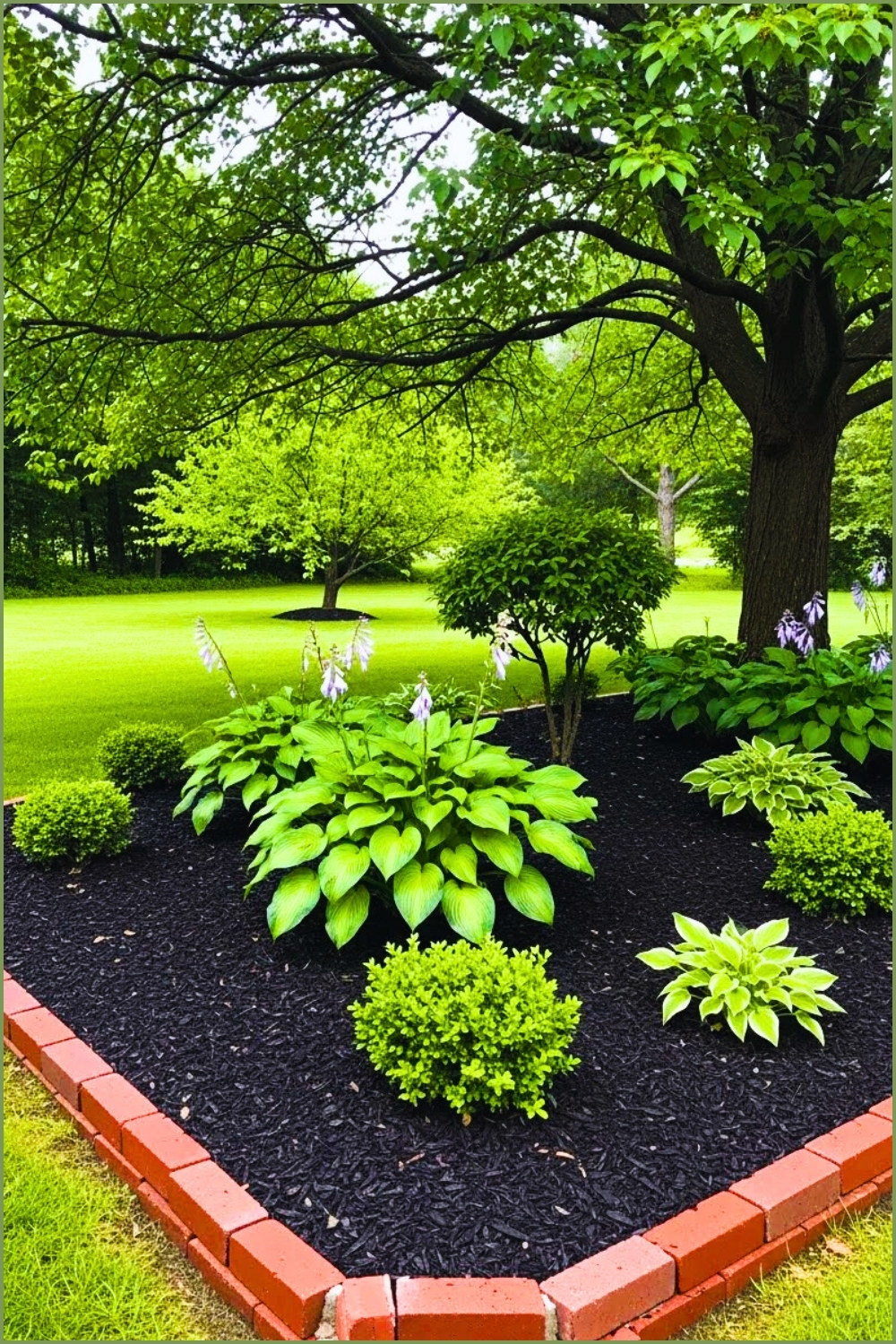
Sharp contrast is the whole point here. Red or clay brick laid on its side along the bed edge, with dark brown or near-black mulch behind it, makes green plants look twice as green. It's a classic look on brick houses because it ties the yard back to the building. Bricks are heavy enough to stay put, easy to replace one at a time, and you can find them secondhand for very little. Set them into a shallow trench with sand underneath so they sit level and don't wobble when you step on them.
Vibrant Summer Flower Border With Pink Petunias
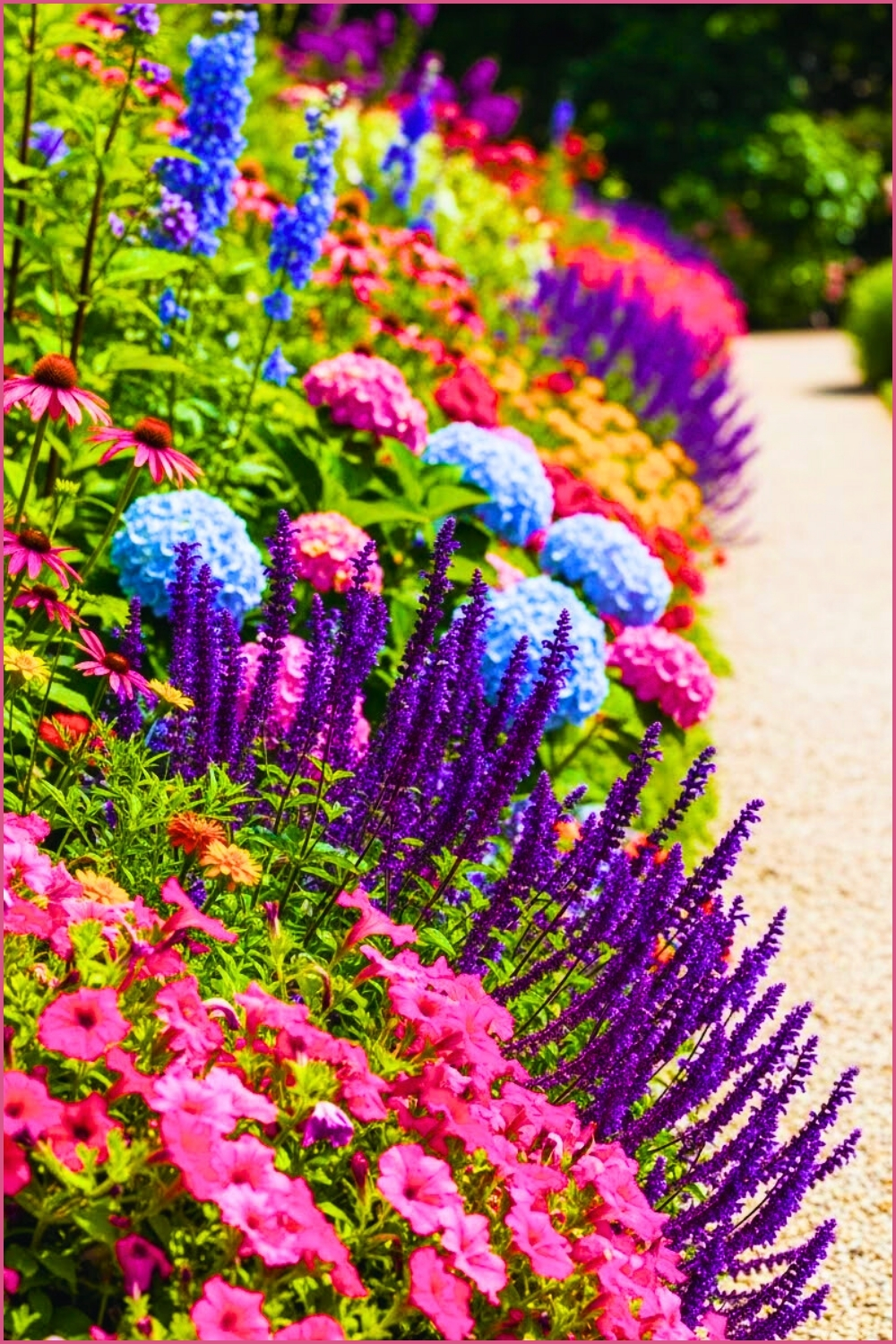
Bright pink petunias spilling over a low stone edge is a summer look that never really goes out of style. Plant them along the front row where they can trail over the border and soften the hard line, with taller greens behind them. The pink against grey stone and dark soil is a simple color combo that reads well from across the yard and photographs nicely. Petunias are cheap, they bloom all season, and they fill in fast, so this is a good option when you want color quickly without waiting years.
Sloped Backyard Covered In Wildflowers
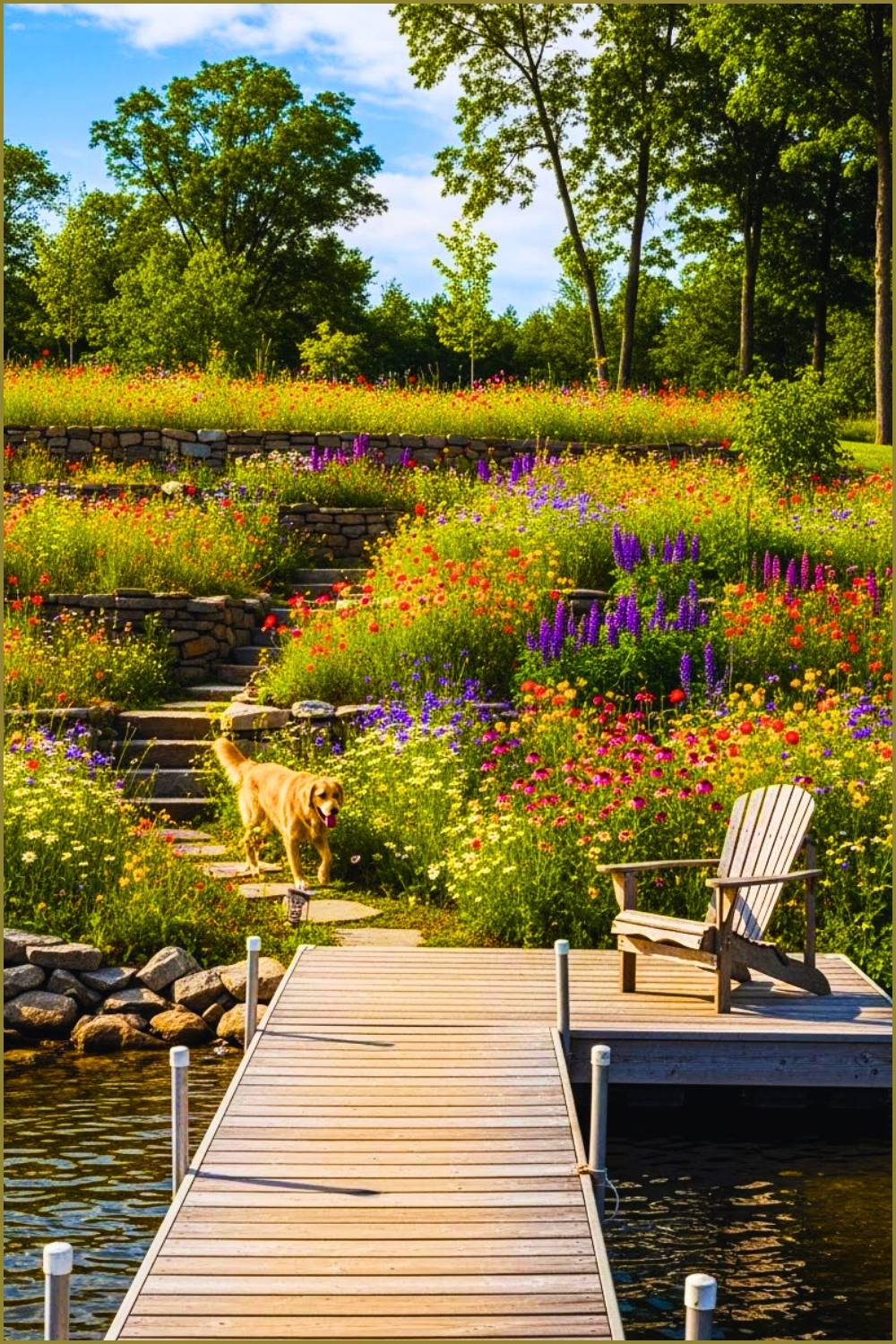
Wild slopes are a headache to mow and a joy to plant. Instead of fighting the hill, cover it with a wildflower mix and edge just the bottom where it meets the lawn or path, using a line of rocks or a low timber wall to stop soil washing down. The mix of yellows, purples, whites and oranges looks natural and messy in a good way. Roots hold the slope together too, so you get less erosion. Once it's established, one cut a year is usually all it needs.
Elegant Garden Walkway Lined With Hydrangeas
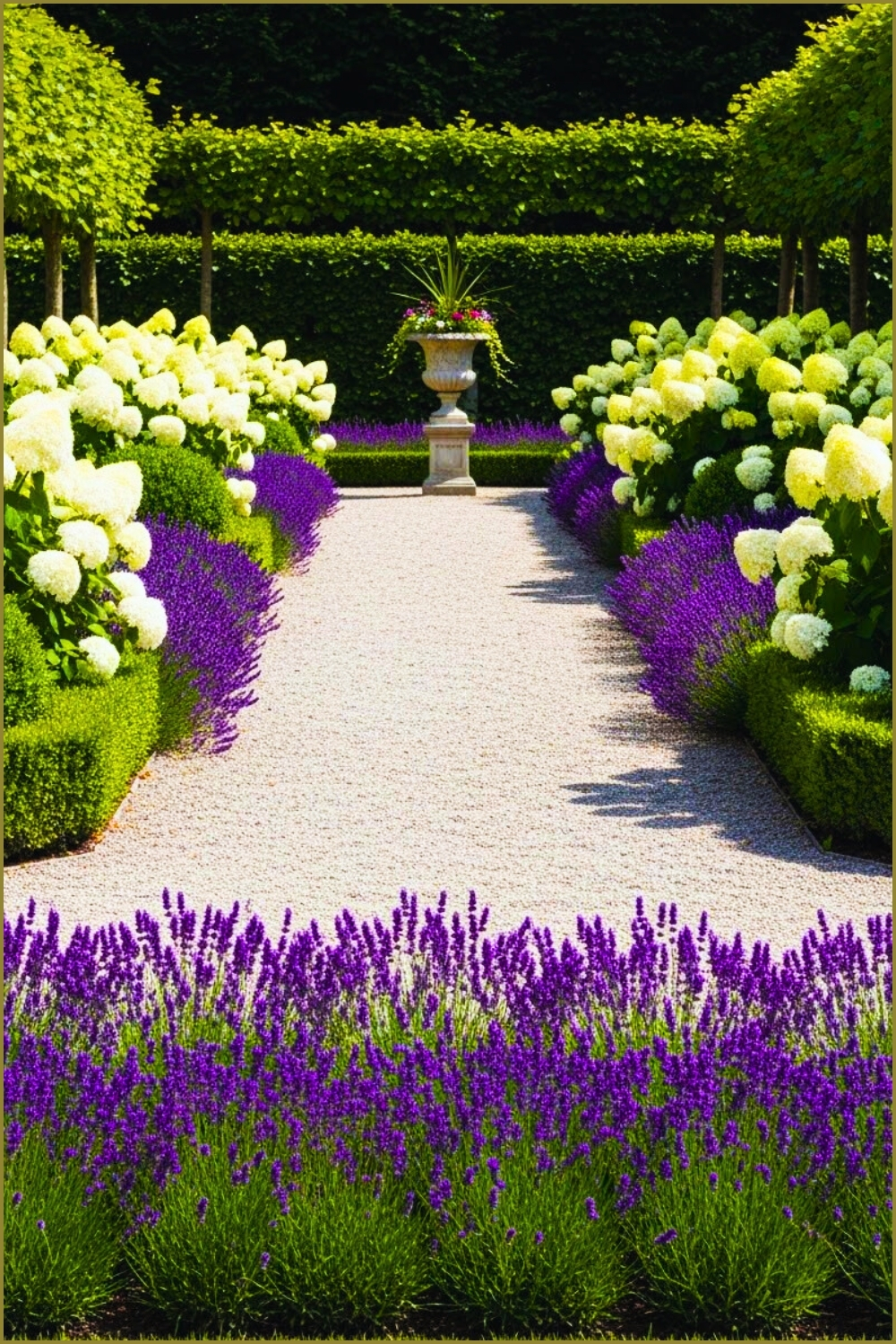
Soft hydrangeas along a walkway make a plain path feel like something. Plant them in a row on both sides, set back about two feet from the edging so the blooms lean in without blocking the way. Big blue, white or pale pink flower heads against green leaves and a light stone or paver path is a calm, easy combination that suits older homes especially well. Use a solid edge like brick or cut stone here, since hydrangeas get wide and you'll want something firm holding the soil and mulch in place.