
10 Wabi Sabi Bathroom Decor Ideas For A Natural Look
Wabi sabi bathroom decor leaves the imperfections in on purpose, so a chipped stone basin and an unfinished timber shelf become the point rather than something to replace. It shares a lot of ground with Japandi bathroom design, only softer and less styled. See how the look is built on the blog.
A potter in Kyoto once repaired a cracked bowl with gold rather than hiding the break, and that instinct is more or less the whole idea behind a wabi sabi bathroom. Raw plaster instead of paint, a stone basin with visible grain, wood left unsealed enough to darken where hands touch it most. Nothing matches exactly. Nothing needs to. The room ages with you instead of looking dated the moment something chips.
Wabi Sabi Bathroom

Wabi sabi is a Japanese idea that basically says imperfect things are worth appreciating, and it translates into bathroom design better than almost any other room in the house. You're not going for polished or perfect here. You want rough stone, soft linen, warm wood, matte surfaces, and a tub that looks like it belongs in a quiet retreat somewhere. The good news is this style actually costs less to pull off than a sleek modern bathroom because you're not chasing perfection. Old textures, natural materials, and earthy colors do most of the work. Here are seven bathroom ideas that get the wabi sabi feeling right.
Luxurious Spa Bathroom With Sculpted Tub
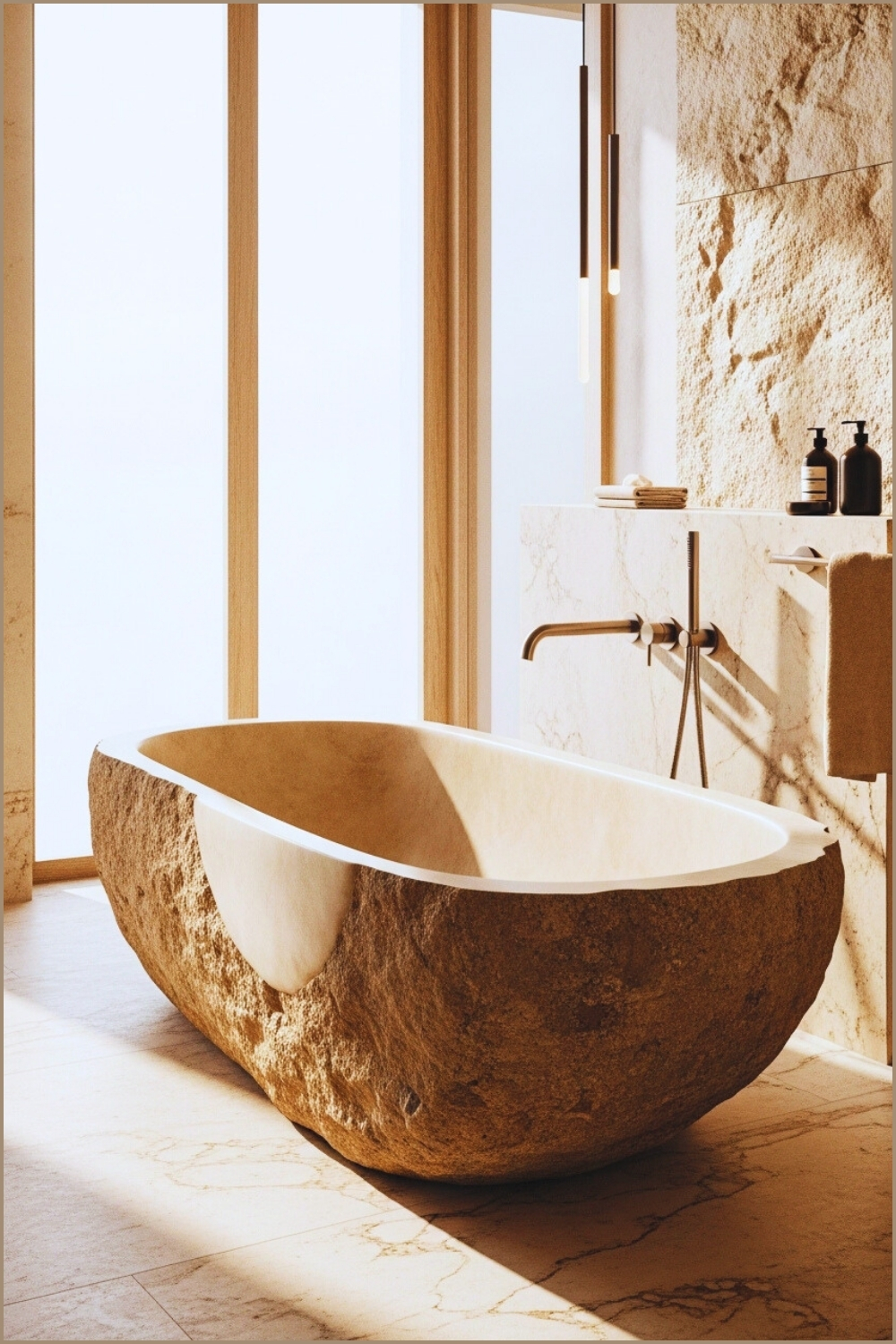
Smooth and organic, a sculpted tub in a warm stone or matte white finish is the kind of piece that changes the whole energy of a bathroom. The curves are soft and uneven in a deliberate way, which is exactly what wabi sabi is about. Set it on a raw stone floor or a large format concrete tile and surround it with very little else. A wooden stool, a single plant, a folded linen towel. The tub does the talking and everything around it just stays quiet. This is one of those rooms that feels more expensive the fewer things you put in it.
Modern Luxury Bathroom With Freestanding Tub
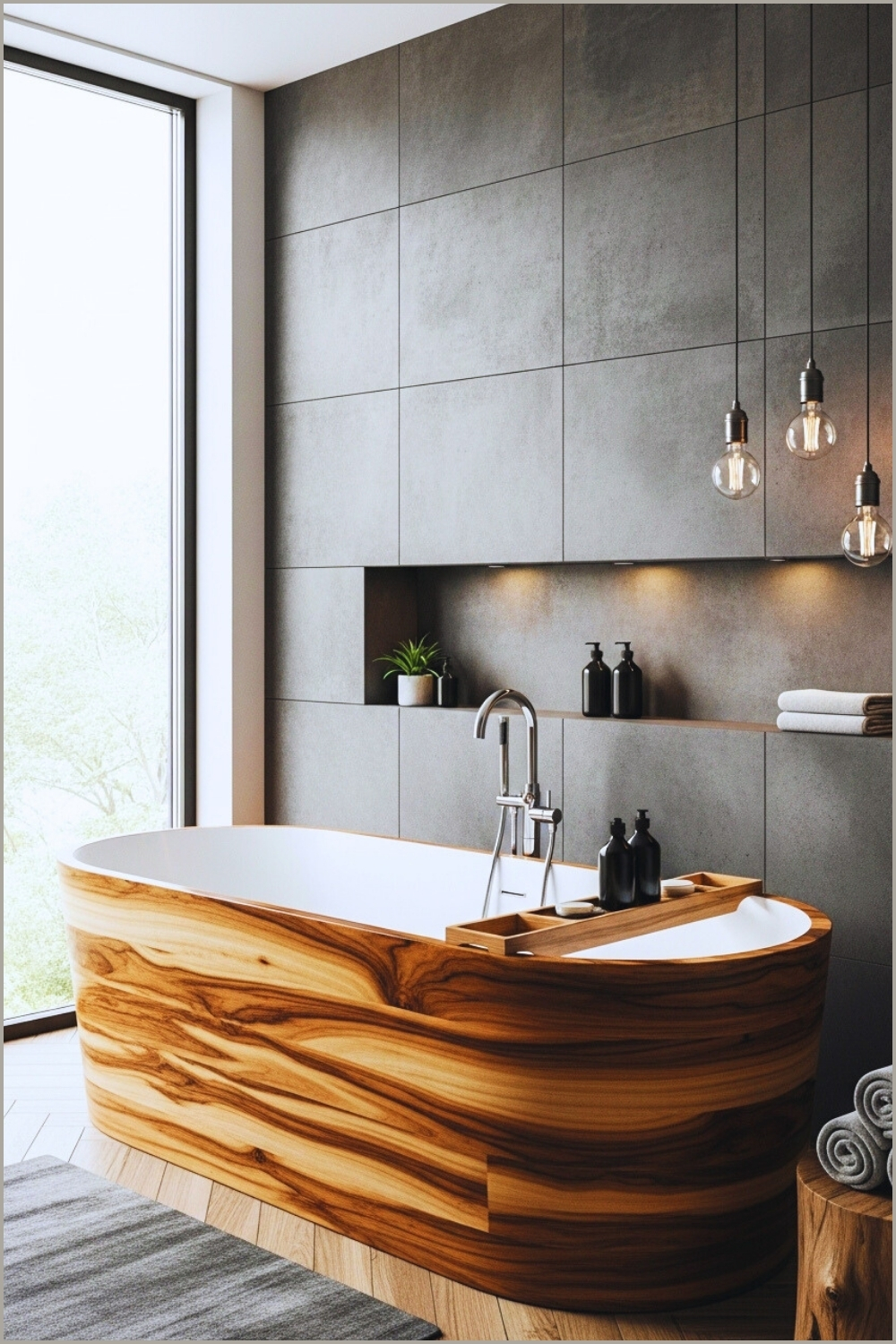
Clean lines and natural materials sit together really well in a wabi sabi bathroom, and a modern freestanding tub is the anchor that holds it together. Go for a matte finish over glossy, something in white, off-white, or warm gray, because matte surfaces have that soft quality that fits the whole mood. The walls and floor stay neutral, think plaster, concrete, or large stone tiles in warm beige or gray tones. Minimal fixtures in brushed brass or matte black keep it grounded. This version works well in a newer home where everything else is already fairly modern.
Cave Style Bathroom With Freestanding Tub
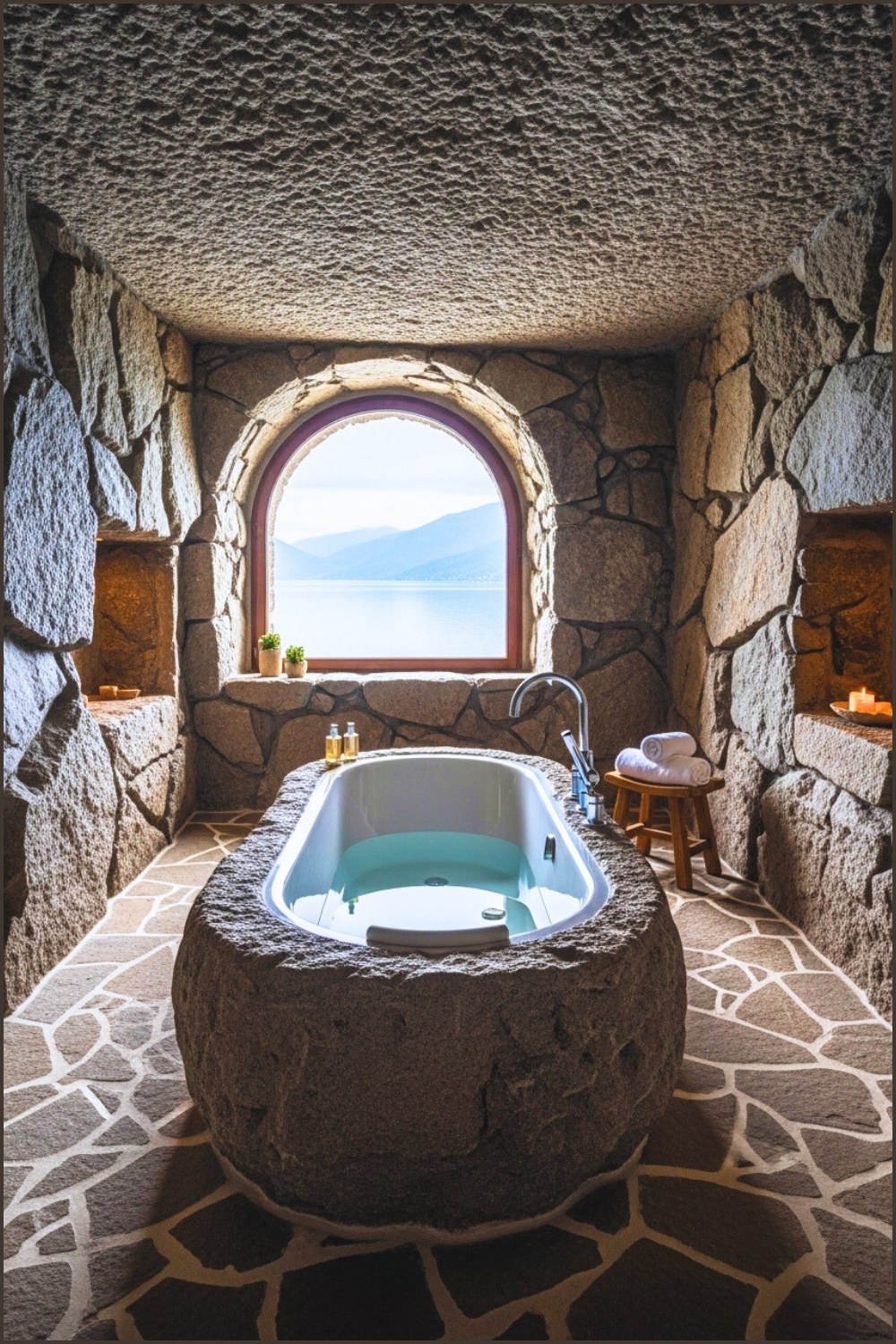
Dark and enveloping in the best way, a cave style bathroom leans into rough stone walls, low lighting, and deep earthy tones that make the room feel like it exists outside of regular time. A white or cream freestanding tub against all that dark rough texture is a contrast that looks deliberate and genuinely beautiful. Recessed lighting or a few simple candles are enough because the room isn't supposed to feel bright. This one works especially well in a basement bathroom or a room with no natural light, turning what might feel like a limitation into the whole point of the design.
Elegant Vintage Bathroom With Clawfoot Tub
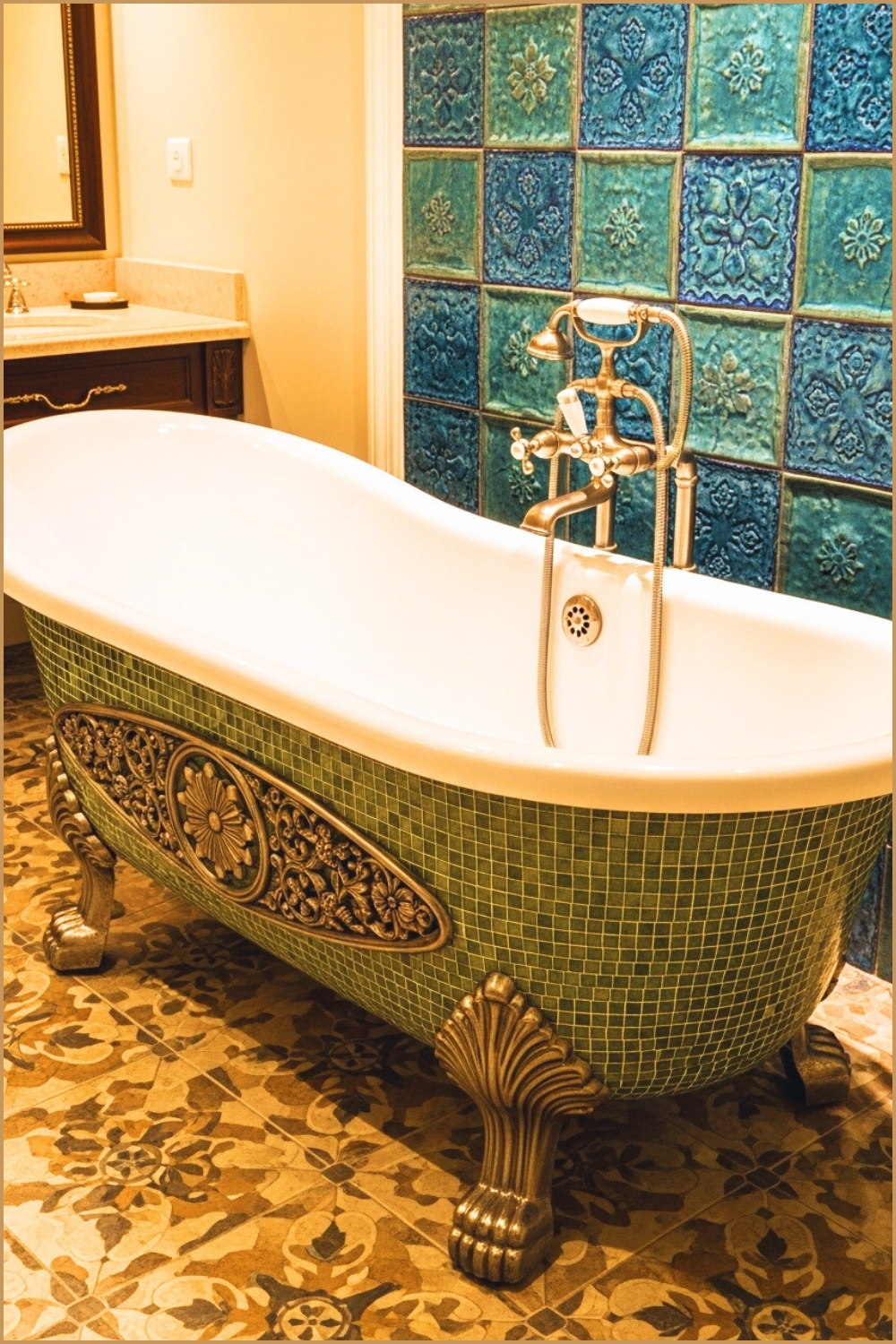
Graceful without trying too hard, a clawfoot tub is almost a wabi sabi piece by nature because it comes with history and imperfection built in. A slightly worn white finish, feet in aged brass, set against soft plaster walls in cream or warm gray gives you a bathroom that looks like it evolved over time rather than being installed all at once. Add a vintage wooden stool or a small antique shelf for towels and the room settles into itself. This works in older homes where the bones of the house already have some character to them.
Rustic Vintage Bathroom With Distressed Clawfoot Tub
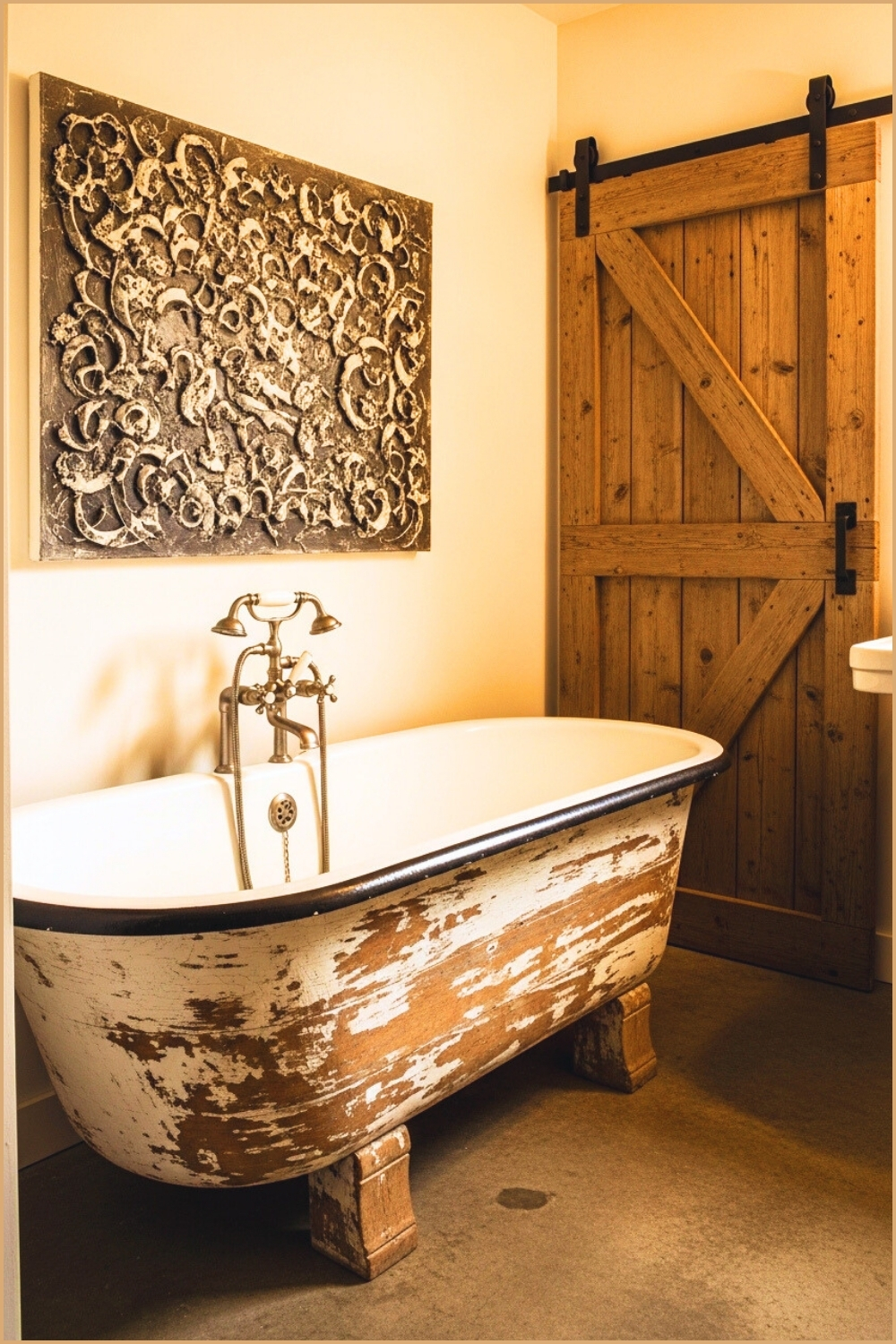
Worn details are the whole point here and that is what makes this version feel different from a standard vintage bathroom. A clawfoot tub with chipped or distressed paint, left that way on purpose, placed on a weathered wood floor or aged stone tile tells a story that a brand new tub just can't. The walls can be rough plaster, old beadboard, or even exposed brick if you have it. Keep the colors in the warm neutral range, creams, taupes, soft whites, so the texture reads clearly. Distressed pieces in this context look intentional rather than neglected.
Rustic Artisan Bathroom With Wooden Bathtub
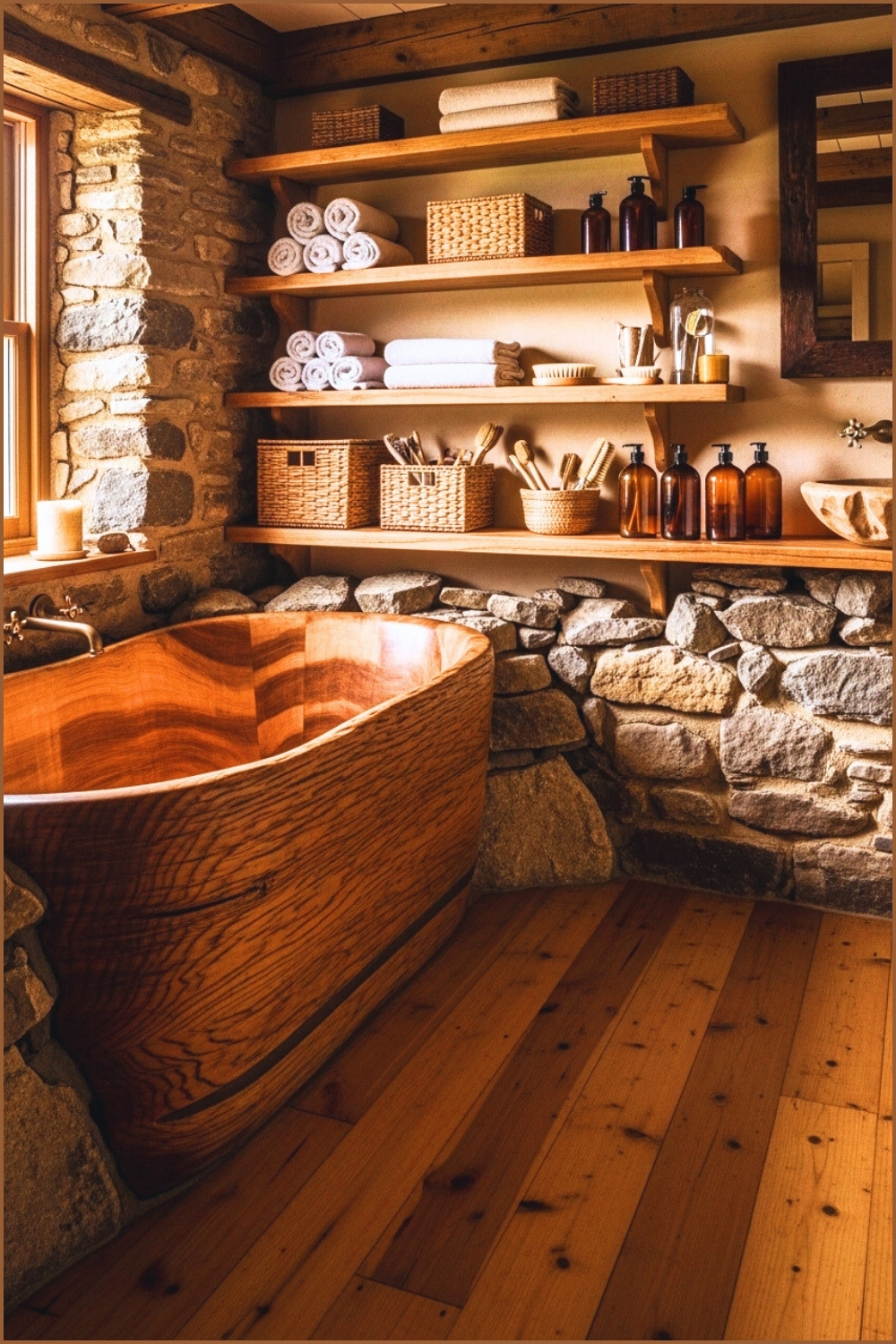
Unusual and genuinely warm, a wooden bathtub is one of the most wabi sabi things you can put in a bathroom because wood is a living material that changes slightly over time. Japanese hinoki wood is the traditional choice and it has a cedar-like smell that makes the whole room feel like a forest spa. The natural grain and the warm brown tone of the wood against white walls or pale stone is a combination that photographs beautifully and feels even better in person. This is a statement piece that needs very little around it to work.
Modern Spa Bathroom With Sleek White Tub
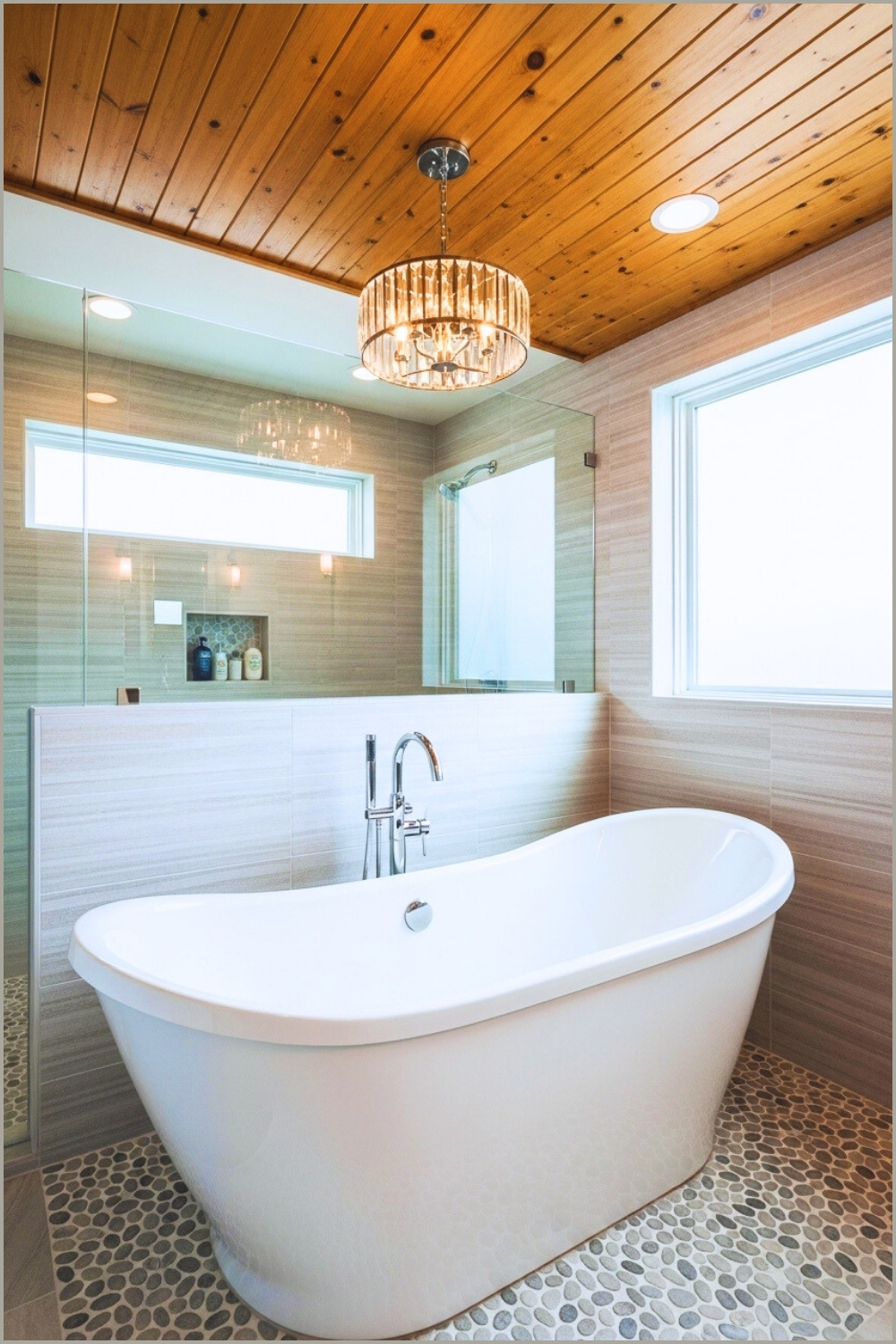
Simple is sometimes the hardest thing to get right, and a modern spa bathroom with a sleek white tub proves that point. The tub sits low and minimal, the walls are plaster or large stone in soft white or warm gray, and the whole room stays very still and very quiet. Wabi sabi comes through here in the materials rather than the shapes, slightly rough plaster, a linen bath mat, a wooden shelf with a few simple objects. There is nothing extra in the room, which is exactly what makes it feel restful. This version suits anyone who likes clean design but wants warmth underneath it.